
Hong Kong delivery drivers demand fairer injury compensation for gig work
Hong Kong delivery drivers express dissatisfaction with proposed injury compensation, citing low payouts and long delays.
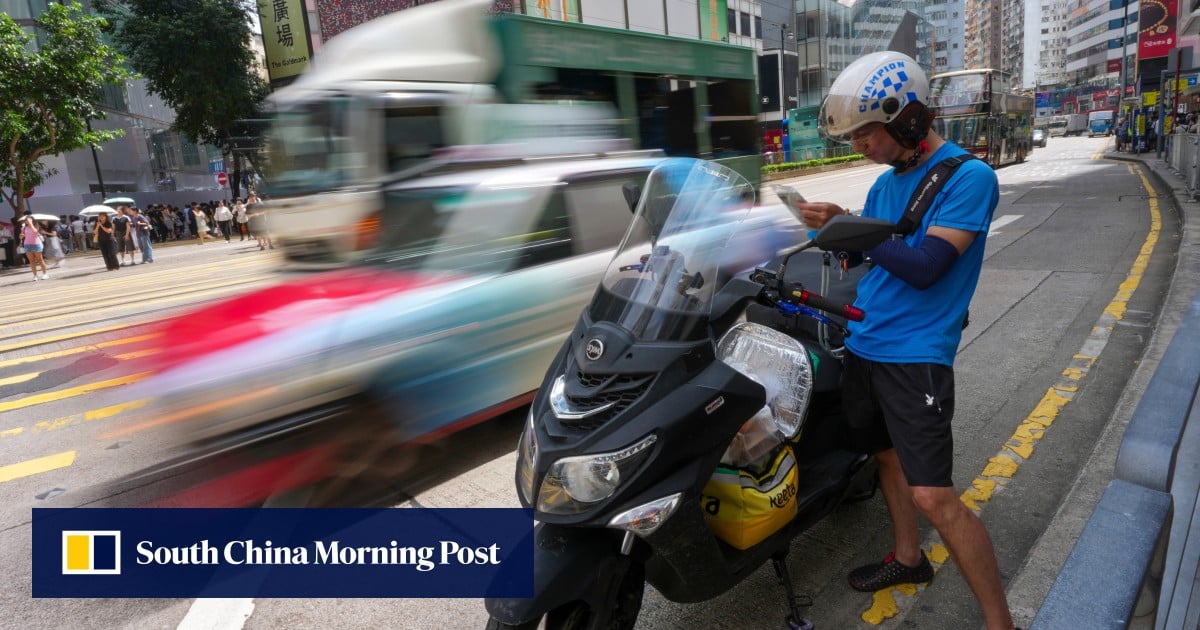
Hong Kong delivery drivers are expressing dissatisfaction with the proposed injury compensation scheme for gig workers, citing concerns over low payouts and long delays in receiving compensation. The issue has sparked debate among workers, unions, and lawmakers, as many argue that the current system fails to reflect their actual earnings and working conditions. The proposed statutory work injury compensation scheme, the first of its kind in the city, aims to provide support to injured gig workers, but drivers say it falls short of their needs.
Current compensation system fails to reflect real earnings
Many delivery drivers, who often work long hours and face unpredictable income, argue that the proposed compensation is based solely on earnings in the month of the accident, which can be significantly lower during slow periods. “If a worker only earned four or five thousand dollars that month, the payout would be too low,” said one rider. This approach, they claim, does not account for their usual income levels, which can range between HK$32,000 and HK$35,000 per month.
Workers like Ali and Bhattarai have waited months for compensation, often receiving only a fraction of what they need. Ali, a rider for the Keeta platform, has been waiting over 18 months for compensation after a delivery accident left him hospitalised. He fractured his thumb and spent five months recovering, during which he lost his usual monthly income. “I kept messaging the insurance agent and they only replied that it will come soon,” he said.
Unions push for better protections and inclusion of occupational diseases
Lawmaker Lam Chun-sing, chairman of the Federation of Hong Kong and Kowloon Labour Unions, has called for compensation to be based on higher income averages, such as three-month or one-year averages, to reflect actual earnings. He also urged the inclusion of occupational diseases, noting that the diagnostic bar is already high and doctor-certified cases are rare. “Riders risk sustaining hand strains from carrying heavy loads,” he said.
Unions argue that logged-on waiting time should be counted as working time, as it is integral to their job. The Hong Kong Food Delivery Workers’ Union, led by Wai San-yuen, said logged-on standby time should be included in the compensation window. “Protection should cover logged-on standby time, because when we are online the platform keeps pushing messages and orders,” he said. Drivers often log on for eight to 10 hours daily, waiting 30 to 40 minutes by the roadside for delivery orders, and argue that this period should be counted as working time.
The government has proposed a new scheme that would cover injuries or death sustained while working through platforms, with benefits mirroring those in the Employees’ Compensation Ordinance. However, the exact formula for calculating income remains under discussion, and occupational diseases would not be covered. Secretary for Labour and Welfare Chris Sun Yuk-han has stated that logged-on waiting time would be excluded from coverage, citing concerns over uncertainty and moral hazard. As the gig economy continues to grow, workers like Bhattarai and Ali are calling on the government to do more to protect their rights. With many still waiting for compensation and struggling financially, the demand for a fairer system is becoming increasingly urgent.